Catalina 30: The Ultimate Guide to a Cruising Icon
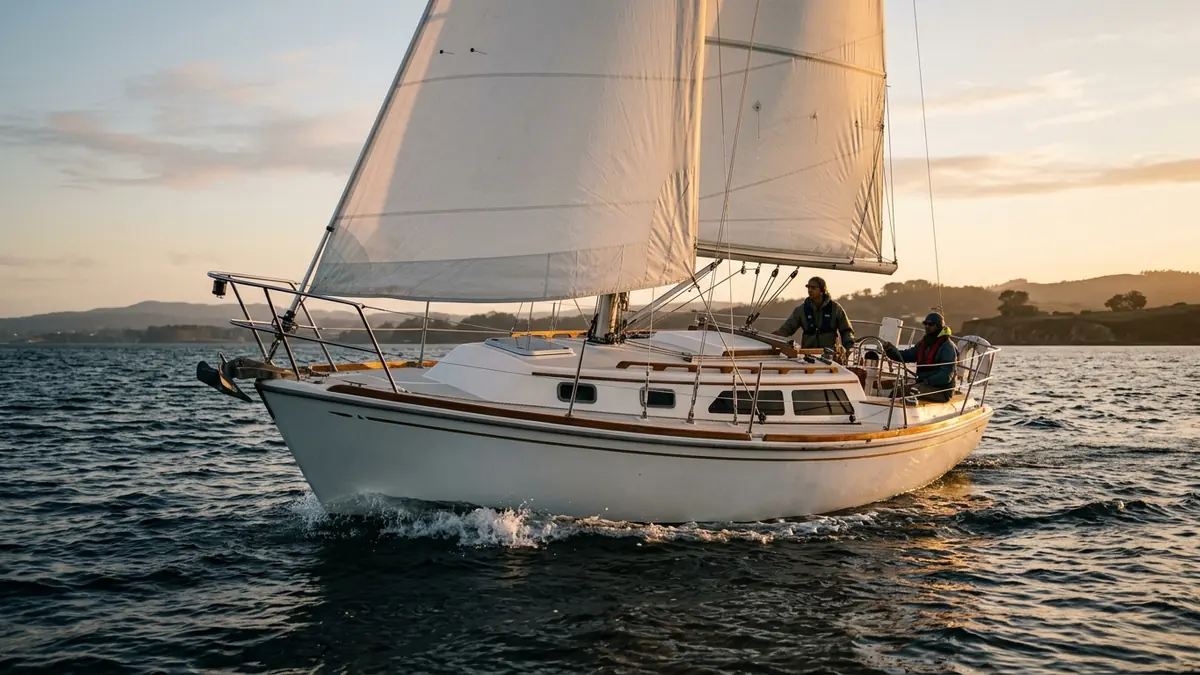
- The Catalina 30 is one of the most successful production sailboats ever built, with over 6,000 units launched.
- It offers a spacious, family-friendly interior that feels larger than its 30-foot length suggests.
- Performance is balanced for coastal cruising, though it is not intended for offshore racing.
- Market data indicates a median asking price of $15,000, making it an accessible entry-point for many sailors.
- Prospective buyers must prioritize checking the keel-to-hull joint and the condition of the original chainplates.
The Catalina 30 stands as a titan in the world of mid-sized production cruisers, having defined the entry-level cruising experience for thousands of sailors since its inception. When you consider the vast array of Types Of Sailboats, few models have achieved the same level of ubiquity and brand loyalty. Its design philosophy focused on maximizing volume and ease of handling, creating a platform that is as capable of a weekend getaway as it is of a coastal passage. For many, this boat represents the first true step into ownership of a vessel that feels like a home on the water.
Throughout its production run, the model underwent various refinements, but the core DNA remained consistent. Unlike the more performance-oriented J30, the Catalina 30 prioritizes comfort and livability. It is a boat designed for the average sailor who values a stable ride and a social cockpit over raw speed. By focusing on volume and simplicity, the builder created a vessel that remains highly relevant decades later, even when compared to modern designs like the Catalina 310, which serves as a spiritual successor to this classic line.
If you are searching for your first keelboat or looking to downsize from a larger vessel, the Catalina 30 deserves a place at the top of your list. Its wide availability and strong community support mean that parts, advice, and modifications are readily accessible. Understanding the nuances of this boat—from its structural vulnerabilities to its handling quirks—is essential before making a purchase. This guide provides an in-depth look at what makes this boat a perennial favorite in the Catalina Sailboats ecosystem.
Catalina 30 gallery — tap any photo to enlarge
Overview and History
The Catalina 30 was first introduced in the mid-1970s by Frank Butler, whose vision for affordable, high-volume sailboats revolutionized the industry. Between 1975 and 1997, the company produced more than 6,000 hulls, cementing the boat's status as a staple of North American harbors. While it is often compared to the Catalina 28 in terms of brand lineage, the 30-foot model offers a significant step up in living space and offshore capability. The boat was designed to be an accessible cruiser, and its popularity is evidenced by the sheer number of vessels still actively sailing today.
Evolution of the Design
Over its two-decade production life, the boat saw several changes. Early models had a slightly different keel profile and interior finish, while later models, particularly the Mark II and Mark III versions, introduced improvements to the deck layout and cabin ergonomics. These updates were largely cosmetic or functional, aimed at making the boat easier to maintain and sail. Despite these changes, the fundamental hull shape remained largely unchanged, ensuring that the boat retained its predictable, stable sailing characteristics.
The Market Context
Because so many were built, the used market is flooded with options, which can be both a blessing and a curse. Buyers can be selective, but they must also be wary of neglected vessels. According to our analysis of 290 historical used-boat listings, the median asking price sits around $15,000. These asking prices, which do not necessarily reflect final sale prices, cover a range of model years from 1975 to 1997, showing that even older, well-maintained boats hold significant value in the current market.
Specifications
| Feature | Specification |
|---|---|
| Length Overall (LOA) | 29 ft 11 in (9.12 m) |
| Beam | 10 ft 10 in (3.30 m) |
| Draft (Standard) | 5 ft 3 in (1.60 m) |
| Displacement | 10,200 lbs (4,627 kg) |
| Ballast | 4,200 lbs (1,905 kg) |
| Fuel Capacity | 18 gal (68 L) approx. |
| Water Capacity | 36 gal (136 L) approx. |
For more detailed technical data, you can consult Sailboat Data or the official Catalina Yachts website.
Design and Performance
The boat was built with a fairly conservative hull form, featuring a moderate displacement and a fin keel. This combination provides a stable platform that is forgiving in a variety of sea states. When evaluating a boat, one metric to consider is the sailboat comfort ratio, which helps potential owners understand how the vessel will behave in choppy water. The Catalina 30 performs well in this regard, offering a motion that is generally comfortable, though it can pound in steep, close-set waves due to its relatively flat underbody forward.
Performance Expectations
While not a racer, the boat is surprisingly capable in light to moderate air. Owners often upgrade their catalina 30 sails to modern materials to improve upwind performance, as the standard cruising inventory can become baggy over time. The rig is a standard masthead sloop, which is simple to tune and maintain. Because the boat has a generous beam, it carries its sail plan well, though it does develop weather helm as the wind increases, requiring a reef earlier than some more modern, lighter designs.
Handling Characteristics
Under power, the boat is predictable. The inboard diesel engine provides sufficient thrust to overcome most head-wind conditions, and the rudder is well-balanced. Maneuvering in tight marinas is manageable, provided the skipper accounts for the prop walk, which is a common trait in this type of keel-and-rudder configuration. The cockpit is spacious, allowing for easy movement, although the traveler placement on many models can be a point of contention for those used to more performance-oriented layouts like the Chico 30.
The Catalina 30 succeeds because it balances the competing demands of interior volume and sailing performance, creating a vessel that feels like a true yacht rather than a day-sailor.
Interior and Layout
The catalina 30 interior is arguably the boat's strongest selling point. By utilizing a wide beam carried well aft, the designers created a cabin that feels cavernous for a 30-footer. The layout typically features a forward V-berth, a head, a main salon with a folding table, a galley, and a quarter-berth. This configuration makes it an ideal boat for a small family or a couple looking to spend extended time on the water.
- The galley is usually located on the port side, featuring a stove, icebox, and sink.
- The head is situated between the V-berth and the salon, providing privacy.
- The salon features settee berths that are long enough for adults to sleep on comfortably.
Common Problems and What to Inspect
Given the age of these boats, structural integrity should be your primary concern. Many of the earlier models are now over 40 years old, and the effects of time and saltwater exposure are inevitable. When inspecting a catalina sailboat 30, pay close attention to the following areas:
- The keel-to-hull joint: Check for signs of separation or "the Catalina smile," which can indicate structural movement or past grounding incidents.
- Chainplates: These are critical points of failure; if they show signs of corrosion or leakage, they must be inspected thoroughly or replaced.
- Deck core: Look for soft spots in the deck, particularly around stanchion bases and hardware, which could indicate water intrusion into the balsa or foam core.
- Engine mounts: Older engines may have sagging mounts, leading to vibration and alignment issues with the shaft.
💡 Tip: Always bring a moisture meter when inspecting a used Catalina 30 to check for hidden delamination in the deck, especially around high-load areas like the mast step and chainplate bulkheads.
Buying a Used Catalina 30
When you are ready to purchase, start by reviewing the BoatUS guides on pre-purchase inspections. With a median asking price of $15,000, you are entering a market where the condition varies wildly. Some boats have been meticulously maintained by long-term owners, while others have languished on the hard. Do not let the low entry price tempt you into buying a "fixer-upper" that will eventually cost double its value in repairs.
⚠️ Watch out: Be extremely cautious of boats that have had "quick" cosmetic refits intended to mask structural issues; always prioritize a professional marine survey over a shiny new paint job or interior cushions.
Who Is It Best For?
The Catalina 30 is best suited for the sailor who wants a reliable, spacious, and affordable boat for coastal cruising and weekend harbor hopping. It is not the right choice for someone looking to cross oceans or win club regattas. However, for the vast majority of sailors, it offers the perfect balance of comfort and utility. It provides a stable learning platform for beginners and enough interior volume to keep non-sailing partners or children happy during long weekends at anchor. By choosing this model, you are joining a vast community of owners who have likely already solved the exact problems you might face, providing a level of support that is rare in the boating world.
Frequently Asked Questions
Is the Catalina 30 a good boat for beginners?
Yes, it is widely considered an excellent choice for beginners due to its forgiving handling characteristics and simple, robust systems. The boat's predictable motion and stable platform help new sailors build confidence in a variety of conditions.
How does the Catalina 30 perform in heavy seas?
While it is a capable coastal cruiser, it is not designed for heavy, offshore conditions. It performs best in sheltered coastal waters and bays, where its moderate displacement and keel design provide a comfortable ride.
What should I look for regarding the keel on a Catalina 30?
You should inspect the keel-to-hull joint for any signs of cracking, separation, or rust streaks, commonly referred to as the 'Catalina smile.' These signs can indicate that the boat has been grounded in the past or that the mounting bolts need attention.
Are parts still available for this boat?
Yes, because thousands were built, there is a strong aftermarket for parts and a very active owner community. Many original components are still available, and many modern replacements have been engineered specifically for this model.