Hobie 16: The Ultimate Beach Catamaran Review
- The Hobie 16 remains one of the most prolific and recognized beach catamarans globally.
- Performance is defined by its asymmetric hulls, which provide lift and speed in diverse conditions.
- Used market analysis shows a median price of $2,000 for models spanning 1970 to 2016.
- Maintenance focuses on sail condition, hull integrity, and the structural health of the trampoline.
- It is an ideal choice for sailors seeking high-speed thrills and simple, trailerable logistics.
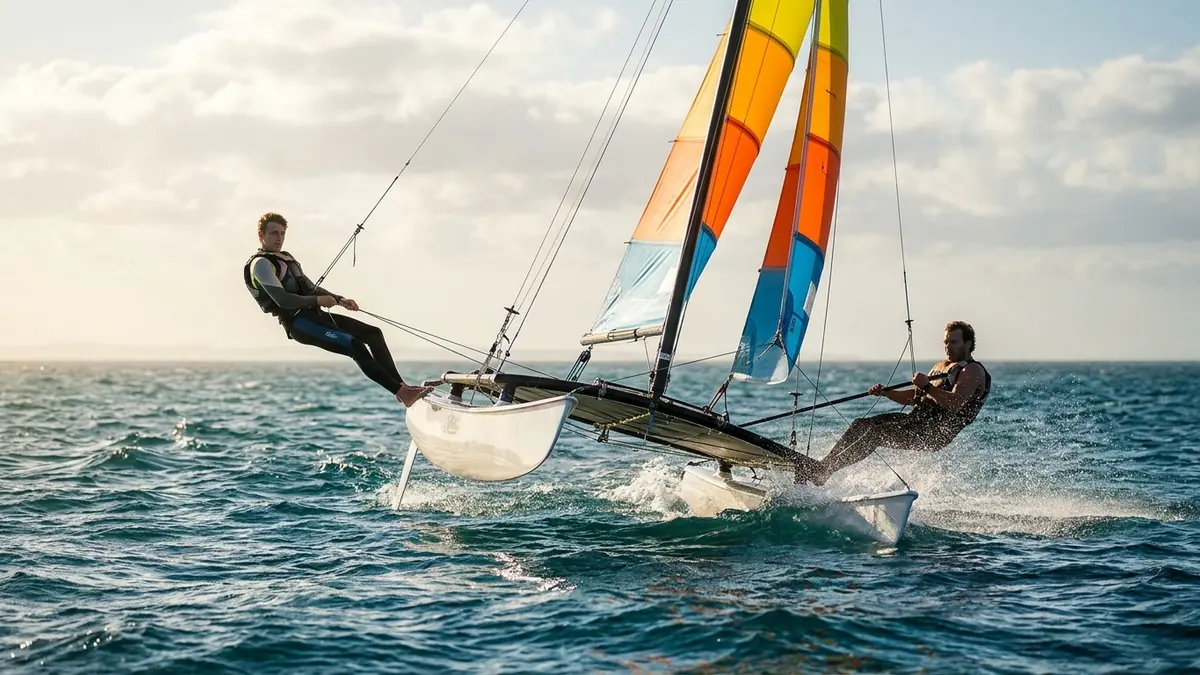
The Hobie 16 is arguably the most recognizable small sailboat in existence. Since its introduction in 1970, this beach catamaran has defined the category of high-performance, accessible sailing for generations of enthusiasts. Its asymmetrical hull design, which eliminates the need for centerboards, allows for effortless beaching and rapid acceleration, making it a staple at sailing clubs and resorts worldwide. If you are exploring the Best Small Sailboats, this model is an essential point of reference. The boat's unique ability to handle surf and shallow water makes it a versatile platform for coastal adventures that would leave traditional monohulls stranded. Unlike many other small craft, this boat offers a unique combination of simplicity and raw speed. It is a boat that rewards skill while remaining approachable for those graduating from entry-level trainers. Whether you are looking for a weekend racer or a fun platform for coastal exploration, understanding the nuances of the platform is crucial for any prospective owner. As part of our comprehensive look at Hobie Sailboats, we analyze why this specific model has maintained its market dominance for over five decades. When considering a purchase, prospective buyers must balance the excitement of the ride against the reality of maintaining a fiberglass catamaran. The boat requires a dedicated approach to rigging and hull care, particularly if it spends long periods in saltwater or exposed to intense UV rays. For those interested in smaller or larger alternatives, the Hobie 14 offers a more solitary experience, while the Hobie 33 provides a completely different performance profile for those seeking more substantial cabin space. Regular maintenance of the standing rigging and trampoline is essential for safety and longevity, ensuring that the boat remains reliable during high-wind sessions. Owners often find that the community support and availability of spare parts are major advantages of choosing such a long-standing production model.
| Feature | Specification |
|---|---|
| Length Overall | 16 ft 7 in (5.05 m) |
| Beam | 7 ft 11 in (2.41 m) |
| Draft | 0 ft 10 in (0.25 m) |
| Sail Area | 218 sq ft (20.25 m2) |
| Weight | 320 lbs (145 kg) approx. |
Hobie 16 gallery — tap any photo to enlarge
Overview & History
Developed by Hobie Alter, the design philosophy was simple: build a boat that could be launched from the beach through the surf. Before this, catamarans were often heavy, cumbersome vessels that required deep water moorings. The introduction of the Hobie 16 revolutionized the industry by proving that a lightweight, high-performance catamaran could be easily handled by two people. The boat was designed to be modular, allowing for easy transport and storage, which helped it gain massive popularity in the recreational sailing market.
Origins and Cultural Impact
Throughout the 1970s and 80s, the boat became a cultural phenomenon. It was not just a boat; it was a lifestyle. With its signature colorful sails and rugged construction, it appeared on beaches from California to the Mediterranean. While newer materials have been introduced, the fundamental design has remained largely unchanged, a testament to the effectiveness of the original concept. The Hobie 16 was instrumental in popularizing catamaran racing, creating a global circuit that still thrives today, fostering a tight-knit community of sailors who value speed and simplicity over luxury.
Design & Performance
The core of the performance lies in its asymmetrical hull shape. These hulls act like a giant daggerboard, providing the necessary lateral resistance to sail upwind without the drag of appendages. This design choice is exactly why the boat excels in shallow waters and is so easy to launch. The hulls are constructed from high-quality fiberglass, designed to withstand the rigors of beach landings and the constant stress of the trampoline and crossbar assembly.
Technical Handling Requirements
- Rigging the mast requires care, as it is a tall, unstayed-style setup that relies on tension.
- The trampoline must be kept tight to ensure a stable platform for the crew.
- Proper batten tension in the mainsail is essential for maintaining the intended aerodynamic profile.
- Mastering the trapeze is vital for maintaining the boat's flat attitude in stronger winds.
The Hobie 16 is less about precision instrument sailing and more about the visceral connection between the wind, the waves, and the sailor's own physical position on the boat.
Sailing & Handling Characteristics
Sailing this catamaran is an exercise in dynamic balance. In light winds, the boat is docile and easy to maneuver, making it great for training. As the wind increases, the boat transforms. The lift generated by the hulls allows for exhilarating speeds, often reaching double digits in the right conditions. The boat's light weight means it reacts instantly to gusts, requiring the crew to be active and responsive to maintain control.
Safety and Recovery
According to US Sailing, proper training on catamarans is vital for safety, especially regarding capsize recovery techniques which are specific to the Hobie 16. The boat's high center of effort means that crew weight placement is the primary method for preventing capsizes, and knowing how to right the boat efficiently is a mandatory skill for any owner.
💡 Tip: Always practice your righting technique in shallow, calm water before heading out into the open ocean, as righting a 16-footer requires specific leverage techniques.
Common Problems & What to Inspect
Because these boats are often left on beaches, UV damage is a primary concern. The fiberglass hulls, while durable, can become brittle over time if neglected. Inspect the hull for soft spots, particularly around the crossbars. Furthermore, the longevity of the boat depends heavily on how well the previous owner managed the salt-water exposure, as salt crystals can cause corrosion in the aluminum fittings.
Structural Integrity Checks
- Inspect the crossbars for signs of oxidation or deep pitting, which may indicate structural weakness.
- Check the rudders and cam systems to ensure they kick up properly when hitting the sand.
- Examine the fiberglass around the shroud anchor points for stress fractures that could lead to mast failure.
- Verify the condition of the hull-to-deck joints to ensure no water ingress is occurring.
⚠️ Watch out: Check the integrity of the fiberglass around the shroud anchor points, as stress fractures here can lead to mast failure under high load.
Buying a Used Hobie 16
Our analysis of 44 historical used-boat listings shows a median asking price of $2,000 for models ranging from 1970 to 2016. When searching, you will often find listings that include a hobie cat 16 trailer, which is a significant value-add. Prices vary widely based on the inclusion of a trailer, the age of the sails, and the overall condition of the fiberglass finish.
Pre-Purchase Checklist
- Inspect the trampoline for fraying or stitching failures.
- Check the mast for any kinks or dents.
- Verify the condition of the standing rigging, especially the shrouds and forestay.
- Ensure all blocks and cam cleats are functional and not seized by salt.
- Evaluate the condition of the sails, as replacing a full set can be a significant investment.
Who Is It Best For
The Hobie 16 is best for the sailor who wants excitement without the complexity of a keelboat. It is a fantastic bridge for those who have mastered a Hobie 14 and want to share the experience with a friend. It is also ideal for families who live near the water and want a boat that can be set up in under an hour. It appeals to those who prioritize the thrill of the ride and the ease of beach access over cabin amenities.
Final Ownership Considerations
Ultimately, the boat is a survivor. It has survived changing trends, the advent of carbon fiber, and the rise of other water sports because it remains fun. It is not designed to be the fastest boat on the water today, nor is it the most comfortable. It is designed to be a blast. Whether you are racing in a local regatta or just spending a Sunday afternoon flying a hull across the bay, the boat delivers on its promise of accessible, high-performance sailing. Owning a Hobie 16 is an entry into a global fraternity of sailors who appreciate the pure, unadulterated joy of sailing a well-designed, time-tested catamaran.
Frequently Asked Questions
Is the Hobie 16 difficult for beginners?
It is accessible for beginners, but it has a steeper learning curve than a monohull dinghy due to its speed and sensitivity to weight. We recommend taking a lesson on a catamaran-specific platform to understand the basics of sailing a multihull.
How many people can fit on a Hobie 16?
The boat is ideally sailed by two adults, though it can carry three in light air. It is designed for a crew of two to balance the boat effectively when the wind picks up.
Do I need a special trailer for a Hobie 16?
Yes, you need a trailer specifically designed for catamarans with cradles that support the hulls properly. A standard flatbed trailer can damage the fiberglass hulls if not outfitted with the correct bunks.
Can the Hobie 16 be sailed alone?
While it is designed for two, experienced sailors can single-hand it in moderate conditions. It requires quick movement and good handling of the mainsheet and traveler.