Lagoon 450: The Definitive Owner's Guide
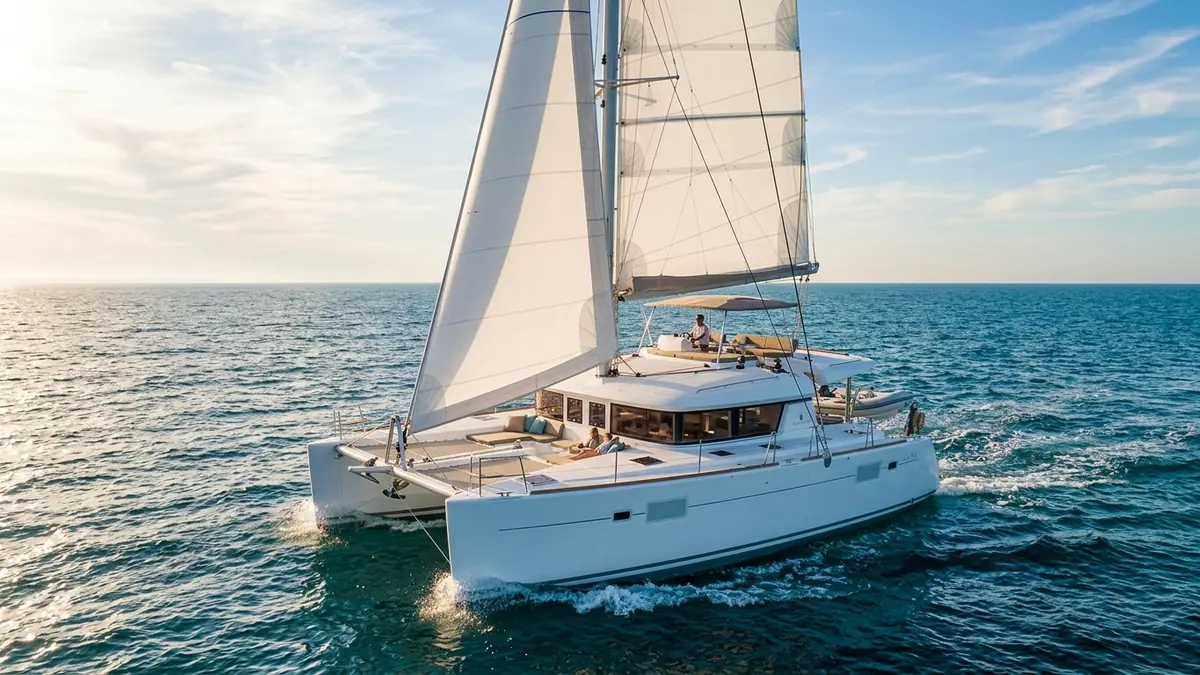
- The Lagoon 450 remains a benchmark for liveaboard comfort and interior volume in the 45-foot range.
- Dual helm configurations exist, but the flybridge version is significantly more popular for social sailing.
- Maintenance of the sail drive seals and rigging is critical for long-term ownership reliability.
- Historical market data shows a median asking price of $505,000 for models produced between 2011 and 2020.
- The boat is optimized for cruising stability and massive living space rather than high-speed performance.
The Lagoon 450 stands as one of the most successful production cruising catamarans ever built, cementing the French shipyard's reputation for prioritizing volume and livability. Designed by VPLP and Nauta Design, this model successfully bridged the gap between smaller, entry-level multihulls and the larger, luxury-oriented yachts found within the Lagoon Sailboats lineup. It is a vessel engineered for those who value comfort at anchor and predictable performance during long-distance passages, making it a fixture in charter fleets and private ownership worldwide.
When evaluating a catamaran lagoon 450, one must understand that the design philosophy centers on maximizing square footage. Whether you are looking for a vessel for a sabbatical voyage or a semi-permanent home on the water, the architectural choices made by the builders offer a unique balance of utility and ergonomics. The transition from the Lagoon 440 to the 450 brought refined aesthetics and a more modern approach to interior light and ventilation, which remains relevant even years after its initial launch.
Prospective buyers often find themselves comparing this model against newer successors like the Lagoon 46 or industry rivals such as the Leopard 45. While newer boats offer updated hull shapes and more advanced rig configurations, the 450 offers a proven track record and a deep pool of available spare parts and owner knowledge. To truly understand if this boat fits your lifestyle, you must look beyond the glossy brochure marketing and consider the practicalities of maintaining a vessel of this size and complexity.
Lagoon 450 gallery — tap any photo to enlarge
Overview and History
The 450 hit the water in 2010, replacing the 440 and introducing a more aggressive, angular aesthetic. Its primary innovation was the flybridge helm station, which elevated the captain for better visibility and cleared the cockpit for a massive social area. Over its decade-long production run, the model saw several iterations, including the lagoon 450s (Sportop) version, which moved the helm to a lower position to lower the center of gravity and provide a more traditional sailing feel. Regardless of the version, the boat is widely recognized by its vertical cabin windows, a hallmark of the Lagoon official site aesthetic that maximizes interior space without sacrificing structural integrity.
Evolution of the Model
Throughout its lifespan, the model underwent minor updates to interior finishes and engine options. The transition from the 450 to the 450S was a response to owners who felt the flybridge was too isolated from the cockpit. The flybridge remains the most common configuration, often preferred by families who want the captain to participate in social gatherings while under sail. Throughout these years, the hull design remained consistent, focusing on displacement and load-carrying capacity rather than light-air performance.
Specifications
| Feature | Specification |
|---|---|
| Length Overall | 45 ft 10 in (13.97 m) |
| Beam | 25 ft 5 in (7.74 m) |
| Draft | 4 ft 3 in (1.30 m) |
| Displacement | 34,179 lbs (15,503 kg) |
| Sail Area | 1,464 sq ft (136 m²) |
| Engine | 2 x 45-57 hp (approx.) |
| Water Capacity | 185 gal (700 L) |
Design and Performance
Performance on a cruising catamaran is always a compromise. The Lagoon 450 is a heavy, high-volume vessel, and it shows in light-wind performance. However, when the wind picks up, the boat finds its stride. It is not designed to win regattas, but it is built to cross oceans in a predictable manner. The rig is positioned well aft, which allows for a smaller, easier-to-handle headsail, though this can sometimes make the boat prone to weather helm if the sail plan is not balanced correctly. For those interested in the physics of multihull design, comparing this against a Catamaran Vs Monohull analysis can provide context on why the boat handles the way it does.
Stability and Handling
Under power, the boat is exceptionally easy to maneuver thanks to the twin-engine configuration. The distance between the propellers makes it possible to spin the boat within its own length, a massive advantage in tight marina fairways. Under sail, the boat feels stiff and secure. While it won't point as high as a performance cruiser like a Weta 44, it maintains a comfortable motion in a seaway, reducing fatigue for the crew on long passages.
The Lagoon 450 is best understood not as a racing machine, but as a floating apartment that is capable of crossing oceans safely and comfortably in moderate conditions.
Interior and Layout
The interior volume is the primary selling point of the Lagoon 450. The saloon is expansive, featuring a 360-degree view that makes the boat feel larger than it is. The galley is well-integrated, allowing the chef to face the cockpit, which is essential for social sailing. Below decks, the cabins are spacious, with the owner's version offering a dedicated hull with a large head and shower. The finish is largely composed of Alpi wood veneers, which are durable but can show signs of wear in high-traffic areas over a decade of use.
Common Problems and What to Inspect
Every boat of this vintage has specific areas that require attention. When inspecting a used unit, focus on the following:
- Sail drive seals: These must be replaced according to the manufacturer's schedule to prevent water ingress.
- Rigging integrity: The standing rigging should be inspected for signs of corrosion, particularly at the swage terminals.
- Electrical systems: Older models may have proprietary systems that are difficult to troubleshoot without specialized knowledge.
- Gelcoat osmosis: While less common in modern construction, check the hulls for any signs of blistering.
💡 Tip: Always request the maintenance logs from previous owners. A well-documented history of engine servicing and haul-outs is a strong indicator of a boat that has been cared for properly.
Buying a Used Lagoon 450
Based on our analysis of historical used-boat listings, there is a robust market for this model. We have tracked 20 listings over recent years, with model years ranging from 2011 to 2020. The median asking price for these vessels is $505,000. It is important to remember that these figures reflect asking prices, not the final sale prices, which can vary based on the vessel's equipment level, engine hours, and geographic location. Prices fluctuate significantly depending on whether the boat was previously used in a commercial charter fleet or kept as a private vessel.
- Establish your budget beyond the purchase price, accounting for at least 10-15% in immediate refit costs.
- Hire a surveyor who specifically specializes in multihulls and understands the nuances of the Sailboat Data specifications.
- Conduct a sea trial in at least 15 knots of wind to observe how the boat handles under sail and power.
- Check the condition of the sails, as replacing a full wardrobe on a catamaran of this size is a significant expense.
⚠️ Watch out: Be wary of boats that have spent their entire lives in high-intensity charter service, as the systems may be worn beyond what is typical for a private vessel of the same age.
Who Is It Best For
The Lagoon 450 is ideal for families and couples who prioritize living space and comfort above all else. If your goal is to spend months at anchor in the Caribbean or the Mediterranean, the boat's ability to host guests and provide a stable platform is unmatched in its class. It is a boat that encourages a slower, more deliberate pace of life. Those seeking a high-performance, adrenaline-filled sailing experience might find the boat lacking, but for the cruiser who values a "home away from home," it remains one of the most practical and reliable choices on the brokerage market today.
Frequently Asked Questions
Is the Lagoon 450 suitable for a couple to handle alone?
Yes, the boat is designed for easy handling by a couple, provided they have a good understanding of reefing and engine maneuvering. Most lines are led to the helm, allowing for single-handed operation in many conditions.
What are the primary differences between the 450 and the 450S?
The primary difference is the helm position. The standard 450 features a flybridge helm, while the 450S (Sportop) has a lower helm station, which some sailors prefer for better communication with the cockpit and a lower center of gravity.
How does the Lagoon 450 perform in light winds?
Like most production cruising catamarans, the 450 is heavy and does not excel in light air. Most owners supplement light-wind performance with a Code 0 or a reaching spinnaker to keep the boat moving efficiently.
What is the expected maintenance cost for a 450?
Annual maintenance costs generally run between 5% and 10% of the boat's value. This includes insurance, dockage, engine servicing, and periodic rigging and sail replacements.