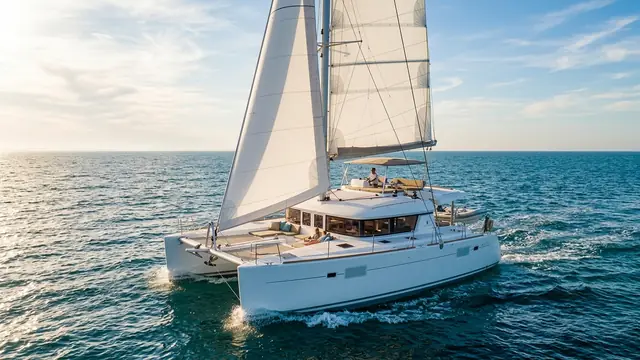
Lagoon 450 vs Leopard 45: The Ultimate Cruising Comparison
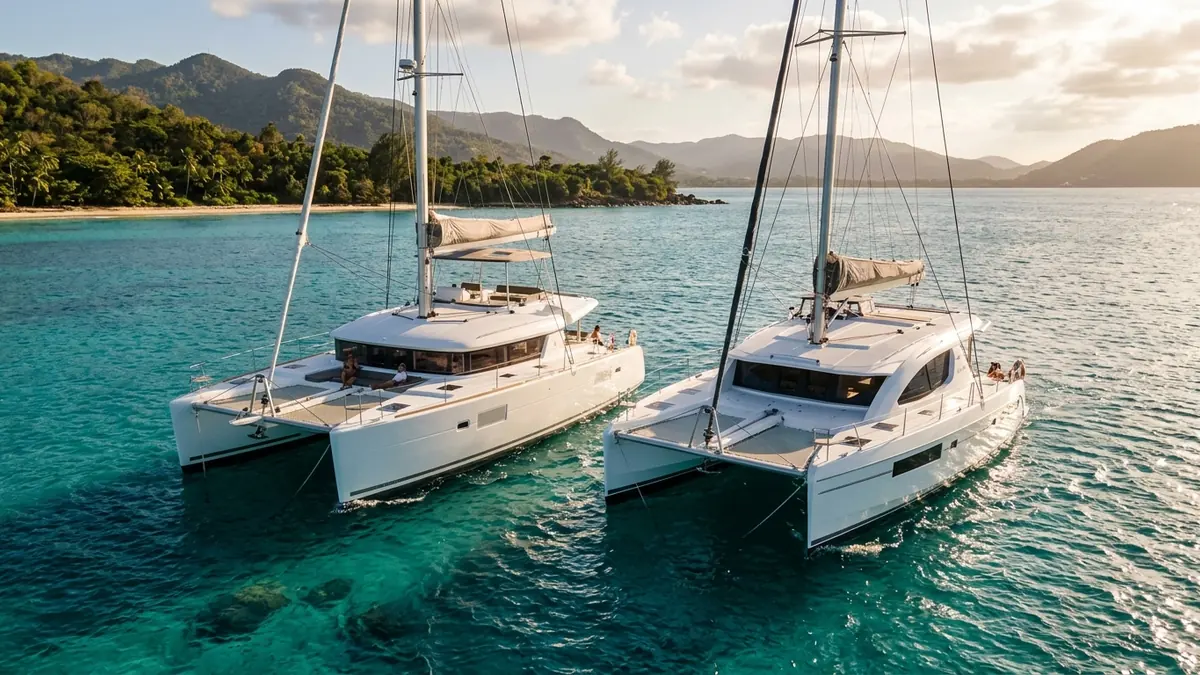
- The Lagoon 450 offers superior living space and a flybridge, ideal for families and social cruising.
- The Leopard 45 prioritizes sailing performance and rugged build quality, favored by blue-water sailors.
- Leopard's signature forward cockpit provides excellent ventilation and a unique social space.
- Used Lagoon 450 prices fluctuate based on charter history, while Leopards often hold value due to build reputation.
- Choose the Lagoon for comfort at anchor or the Leopard for a more engaging and responsive sailing experience.
When considering the dream of long-term cruising, the debate between the Lagoon 450 vs Leopard 45 is a rite of passage for many sailors. Both vessels represent the pinnacle of production catamaran design, offering a balance of space, safety, and liveability that continues to dominate the charter and private ownership markets worldwide. Choosing between these two iconic French and South African designs requires a deep understanding of your personal sailing priorities and intended lifestyle.
For many, the appeal of a catamaran lies in the stability and expansive living areas that are impossible to replicate on a monohull. Whether you are transitioning from a traditional sailboat or upgrading from a smaller vessel, the differences between these two 45-foot platforms are significant. The Lagoon 450 is often celebrated for its massive interior volume and innovative flybridge, while the Leopard 45 gains accolades for its smart engineering and functional forward cockpit design.
Before making a final decision, it is essential to look beyond the brochure specifications. The market for these vessels is mature, and understanding the nuances of their construction, rigging, and maintenance history is vital. As you explore the Lagoon 450 or the Leopard 45, remember that your final choice should align with your tolerance for maintenance, your sailing experience, and your goals for long-range travel, as discussed in our guide on Catamaran Vs Monohull.
Lagoon 450 vs Leopard 45 gallery — tap any photo to enlarge
Lagoon 450 vs Leopard 45 at a Glance
| Criterion | Lagoon 450 | Leopard 45 |
|---|---|---|
| Length Overall (LOA) | 45 ft 10 in (13.97 m) | 45 ft 0 in (13.72 m) |
| Beam | 25 ft 9 in (7.84 m) | 24 ft 1 in (7.35 m) |
| Draft | 4 ft 3 in (1.30 m) | 5 ft 1 in (1.55 m) |
| Displacement | 34,170 lbs (15,500 kg) | 33,000 lbs (14,968 kg) |
| Sail Area | 1,410 sq ft (131 sqm) | 1,390 sq ft (129 sqm) |
| Headroom | 6 ft 7 in (2.00 m) | 6 ft 6 in (1.98 m) |
| Typical Used Price | $350k - $550k | $400k - $600k |
| Build Quality | Production Standard | High-End/Robust |
| Best Use | Social Cruising | Blue-water Sailing |
Overview & History
The Lagoon 450, introduced in 2010, fundamentally changed the way cruisers viewed the 45-foot catamaran segment. By introducing the flybridge helm station, Lagoon moved the skipper away from the cockpit, creating a distinct separation between sailing operations and socializing. This design choice maximized the living area in the cockpit and salon, making it an instant hit for charter companies and families alike. Over the years, the model evolved into the 450S (Sportop) to satisfy owners who preferred a traditional bulkhead helm.
Evolution of Design
Lagoon's shift to the flybridge model was a strategic move to reclaim cockpit space for social gatherings, effectively turning the boat into a multi-level entertainment platform. The Leopard 45, meanwhile, maintained a more traditional profile to ensure the boom remains accessible and the center of gravity stays lower for better performance.
Conversely, the Leopard 45, built by Robertson & Caine in South Africa, follows a different design philosophy. Known for their roots in the charter industry, Leopard catamarans are built to be robust, reliable, and easy to maintain. The Leopard 45 features the trademark forward cockpit door, which allows for direct access from the salon to the foredeck. This feature, combined with a lower center of gravity and more traditional helm placement, appeals to sailors who value a closer connection to the water and more responsive handling under sail.
Design & Performance
When comparing the performance of these two, it is important to acknowledge that neither is a racing yacht. However, the Leopard 45 typically feels slightly more balanced and agile. According to data found at Sailboat Data, the weight-to-sail-area ratio often favors the Leopard, allowing it to perform better in lighter winds. The Lagoon 450, with its higher profile and flybridge, carries more windage, which can make it feel sluggish in light air but impressively stable and dry in heavy seas.
💡 Tip: Always check the condition of the running rigging and sail inventory on used catamarans, as these are often the first components to suffer from UV degradation and heavy charter use.
Construction and Build Philosophy
Lagoon utilizes a sophisticated infusion process that ensures consistent weight and structural integrity across their fleet. The result is a boat that feels solid, though the sheer volume of the interior means that weight savings are often offset by the weight of luxury amenities. Leopard, drawing on their experience building boats for the demanding conditions of the South African coast, often employs a more utilitarian approach to construction. You will find that systems on a Leopard are generally more accessible, which is a major advantage for owners who plan to perform their own maintenance.
Structural Integrity Considerations
Both manufacturers utilize high-quality resins and core materials, but the internal framing differs. Lagoon focuses on maximizing internal volume through wider hull sections, whereas Leopard prioritizes structural rigidity to handle the heavy seas often encountered during Indian Ocean deliveries from the factory.
Interior & Layout
The interior of the Lagoon 450 is its greatest asset. The volume is simply staggering for a 45-foot boat. The salon is light, airy, and features a panoramic view that makes the boat feel like a floating apartment. The flybridge, while divisive among purists, provides a massive seating area for guests to watch the sailing action from above. If you prioritize hosting guests and having a spacious area for sunset cocktails, the Lagoon 450 is difficult to beat.
In contrast, the Leopard 45 interior feels more like a yacht designed for sailors. The materials are durable, and the layout is focused on practicality. The forward door is a game-changer for ventilation, allowing a breeze to flow through the entire salon while at anchor. While the Lagoon 450 offers a more "residential" feel, the Leopard 45 offers a "nautical" feel that many cruisers find more comforting during long passages.
Sailing & Handling Characteristics
Handling the Lagoon 450 requires an adjustment period if you are used to a lower helm. Because the helm is on the flybridge, you are disconnected from the cockpit. While this offers excellent visibility, it can feel isolating during a night watch. Maneuvering in tight marinas is aided by the visibility, but the height of the rig and the windage require a confident hand when the breeze picks up.
The Leopard 45 provides a more conventional helm station, usually protected by a hardtop bimini. The steering feels more direct, and you remain part of the conversation in the cockpit. Sailors often report that the Leopard is easier to reef and handle shorthanded. For those looking to gain more skills, resources from US Sailing can help you understand the nuances of sail trim on these larger platforms, ensuring you get the most out of your boat regardless of the model.
- Improved visibility from the flybridge on the Lagoon 450.
- Direct cockpit-to-foredeck access on the Leopard 45.
- Reliable Yanmar or Volvo diesel powerplants in both models.
- Large fuel and water tankage suitable for blue-water cruising.
Common Problems & What to Inspect
- Check the hull-to-deck joints for signs of stress or previous repairs.
- Inspect all through-hull fittings for signs of corrosion or leakage.
- Examine the sail drive seals; these are critical maintenance items that must be replaced on a schedule.
- Look for water ingress around the mast base and portlights.
- Test all electronic systems, as these are often the most expensive items to replace.
⚠️ Watch out: Be wary of "ex-charter" boats that have been pushed hard. A thorough survey by a professional familiar with catamarans is non-negotiable before purchase.
According to BoatUS, the most frequent insurance claims for catamarans involve docking mishaps and lightning strikes. Regardless of the model, ensure the lightning protection system is well-grounded and that your docking technique is refined for the increased windage of a catamaran.
Buying a Used Lagoon 450 vs Leopard 45
When buying used, the price range for a well-maintained Lagoon 450 generally sits between $350,000 and $550,000, depending on the year and equipment. Leopard 45s, due to their reputation for build quality, often hold their value exceptionally well, with prices typically ranging from $400,000 to $600,000 for comparable years. Always factor in the cost of a major refit, which can easily add $50,000 to $100,000 to your initial investment if the boat hasn't been upgraded recently.
"The true cost of a catamaran is not the purchase price, but the ongoing commitment to maintaining its complex systems, from the engines to the watermakers and solar arrays."
Who Is It Best For?
The Lagoon 450 is the ultimate platform for the family that wants a mobile home. If your sailing plans involve coastal hopping, island living, and plenty of time at anchor with friends, the volume and comfort are unmatched. It is a boat that prioritizes the "living" aspect of "liveaboard."
The Leopard 45 is the choice for the serious sailor who wants to cross oceans. It is more robust, easier to maintain, and offers a more engaging sailing experience. If you value build quality and practical engineering over the absolute maximum interior volume, the Leopard 45 will likely be the better partner for your offshore adventures.
Frequently Asked Questions
Is the Lagoon 450 better than the Leopard 45 for liveaboards?
The Lagoon 450 is generally considered superior for liveaboards who prioritize interior volume and social space. The Leopard 45 is often preferred by those who want a more robust, sailor-focused design that is easier to maintain.
Which boat has a better helm station?
The Leopard 45 features a traditional helm station that keeps the skipper involved in cockpit activities. The Lagoon 450 uses a flybridge helm, which offers excellent visibility but separates the skipper from the rest of the crew.
Does the Leopard 45 sail faster than the Lagoon 450?
Generally, the Leopard 45 is slightly more responsive and performs better in light wind conditions. The Lagoon 450 is heavier and has more windage, which can affect its speed, though it remains a stable and comfortable cruiser.
Are these boats suitable for single-handed sailing?
Both boats can be sailed single-handed if they are equipped with electric winches and proper sail handling systems. However, the Leopard 45's helm layout is often cited as more convenient for a lone sailor to manage lines and steering simultaneously.